Professional rental platform
Seasonal fire work, student housing, and constantly moving showed me that the rental system needs to be professionalised. After years of renting, paying on time, and looking after high-value assets, you shouldn't have to start from square one just because you changed jobs or found a new city — DwellBridge grew out of that friction. The rental market assumes permanence. Transient workers, students, and mobile professionals need infrastructure that treats movement as normal, and treats both sides as professionals engaging in a partnership to care for their futures.
The front door
Find a partner
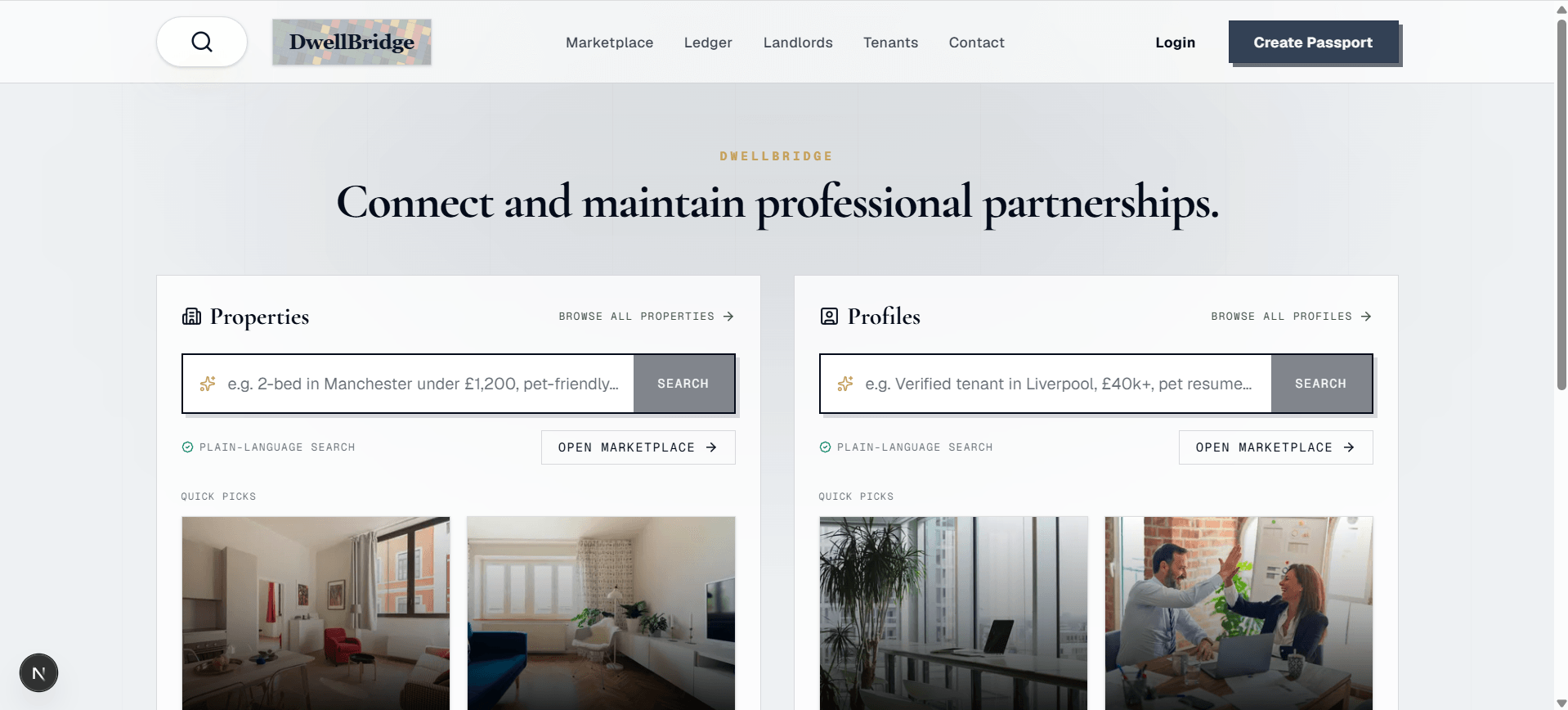
The home screen puts Properties and Profiles side by side — plain-language search, quick picks, and a clear path into the marketplace. The point is partnership infrastructure, not another database of listings.
Chapter 01 · Why
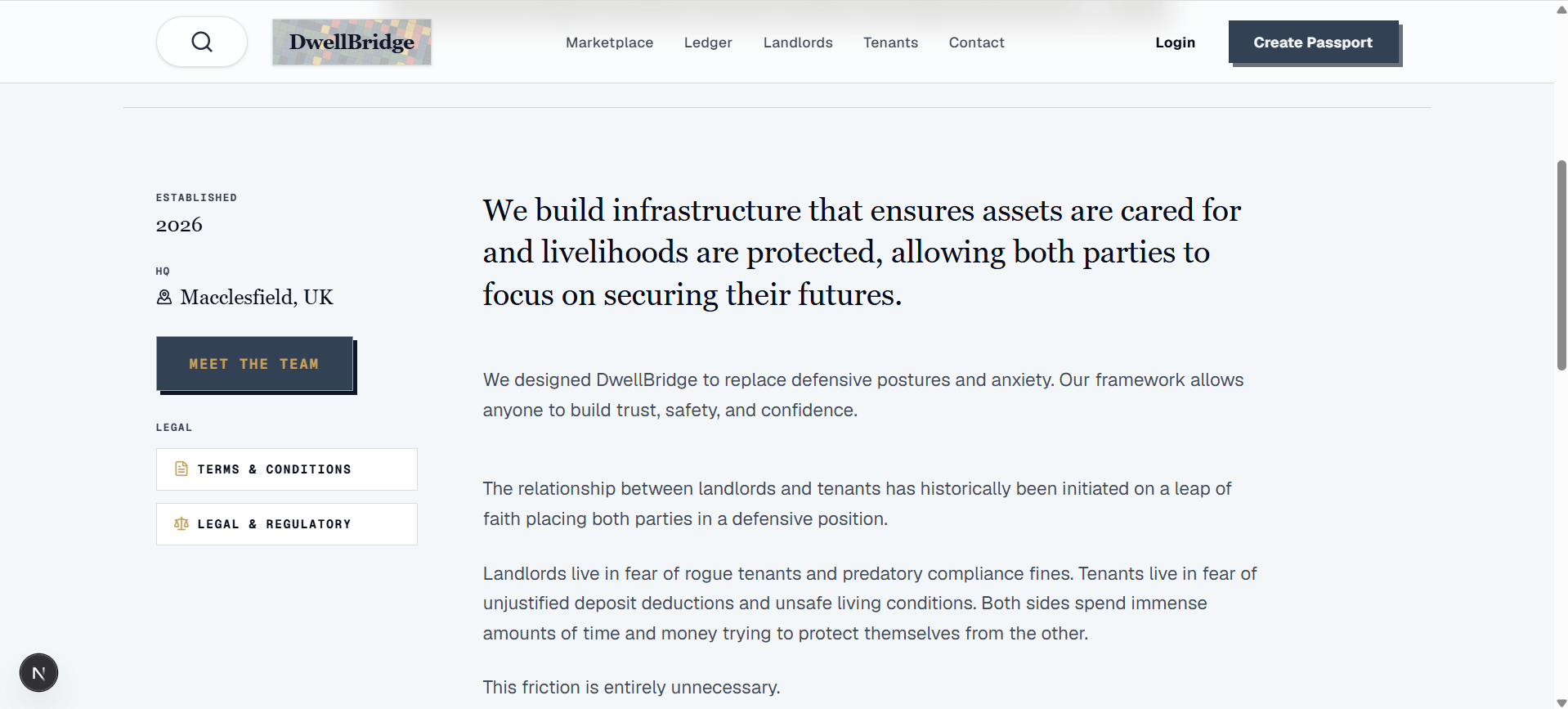
Assets cared for. Livelihoods protected.
Replace defensive postures between landlords and tenants with trust built on evidence.
Established 2026. Built for people who care for homes and livelihoods.
Chapter 02 · Asset managers
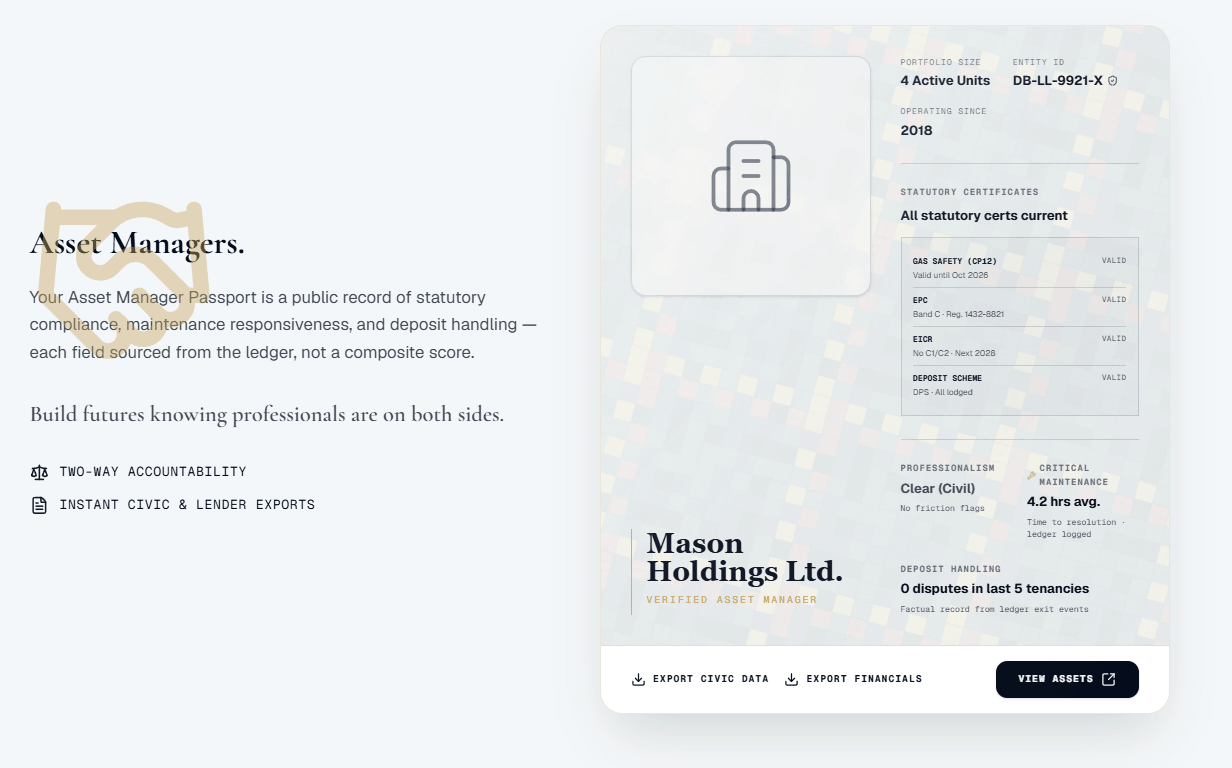
A passport sourced from the ledger
Asset Manager Passports are public records of statutory compliance, maintenance responsiveness, and deposit handling — drawn from the ledger, not a composite score someone invented in a spreadsheet.
Two-way accountability. Instant civic and lender exports. Build futures knowing professionals are on both sides.
Chapter 03 · Tenants
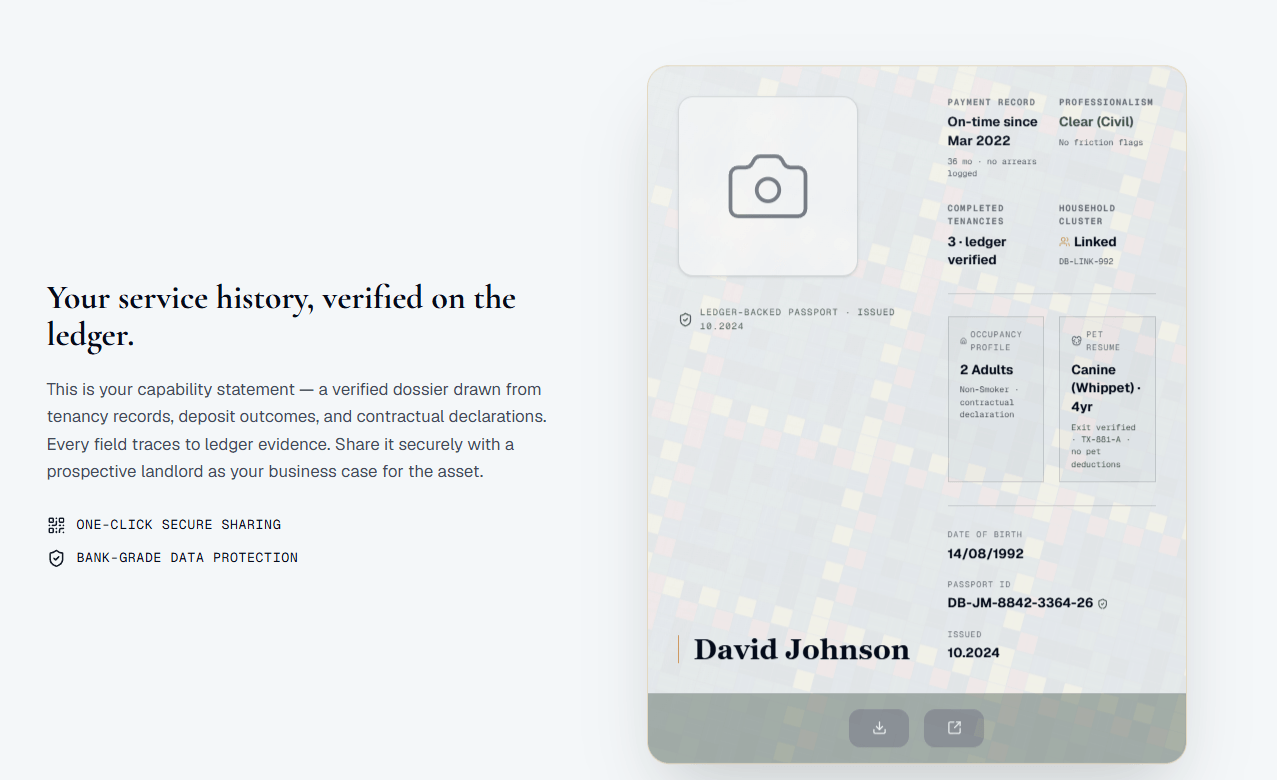
Your service history, verified
Tenant passports are capability statements: payment record, professionalism flags, completed tenancies, occupancy profile, even a pet resume with exit verification.
Share securely with a prospective landlord as a business case for the asset — bank-grade protection, one-click sharing, every field tracing to ledger evidence.
Chapter 04 · Institutional layer
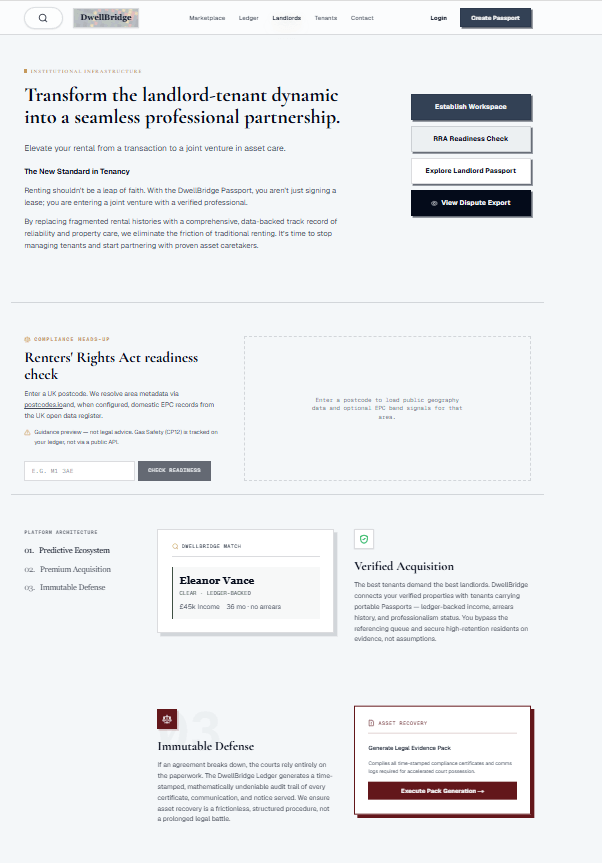
From partnership language to readiness checks
DwellBridge stretches from human partnership copy into institutional tooling: workspace setup, Renters’ Rights Act readiness by postcode, verified acquisition, immutable defense packs. The architecture is meant to feel like infrastructure — predictive, defensive, and boring in the ways that protect people.
Chapter 05 · Onboarding
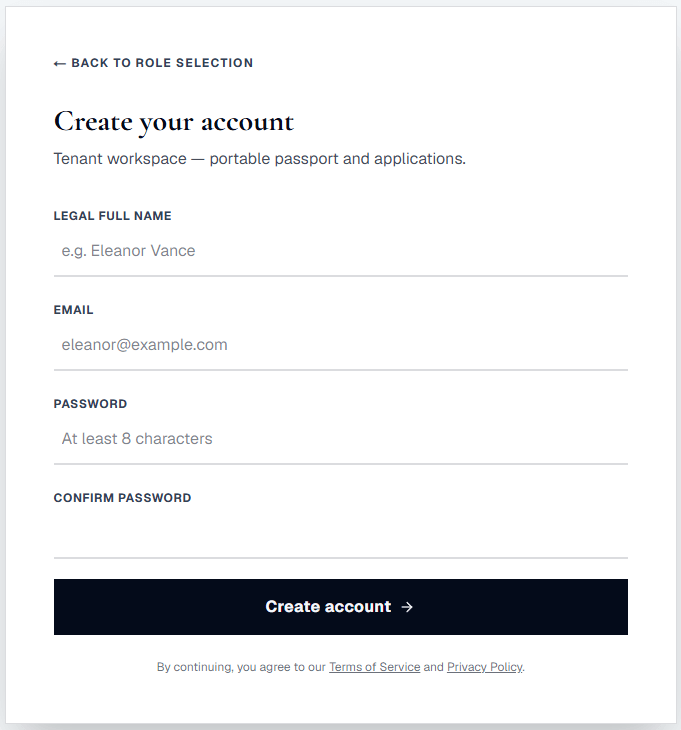
A workspace that starts with a role
Account creation is calm and role-aware: tenant workspace, portable passport, applications. The form is sparse on purpose — the product’s complexity lives in the ledger and the passport, not in a fifteen-field signup gauntlet.
I built the tool I wished existed as I moved from city to city, job to job, and lease to lease — something that respected both sides as professionals with a history, not as strangers guessing in a listing feed. After a decade of renting, you should have increased in value, not have it erased at every turn.
Craft
Mobile-first, accessibility first
TypeScript, React, Next.js, Tailwind, Shadcn UI, Supabase — chosen for speed of iteration without abandoning clarity. UX patterns come from real housing pain points: seasonal moves, verification that means something, and flows that stay readable when the stakes are rent and reputation.
Problem
The rental market assumes stable, long-term tenancy — leaving seasonal and mobile people with tools that do not match how they live and treats them as liabilities rather than assets.
Approach
Full-stack product work with ledger-backed passports, plain-language search, and accessibility-minded flows.
Outcome
A functional platform prototype where both sides carry verified history — not just listings and hope.
Technologies
- TypeScript
- React
- Next.js
- Tailwind CSS
- Shadcn UI
- Supabase
- UX
- Accessibility